License Number: cpc1457222


Have you ever thought about which type of pool is easier to maintain? This is a question many of us home and property owners ponder, especially when the lazy days of summer are almost upon us. The answer isn’t as straightforward as you might think; it depends on several factors that overlap like a neatly stitched quilt. Today, we’re going to stir the waters and clear the air, making it a bit easier to decide which pool option might ease our workloads and maximize our leisure time.

Types of Pools: An Overview
Understanding the basic types of pools helps us determine which might require less effort when we’re on maintenance duty. Generally, pools come in two main varieties: above-ground and in-ground. But before we cast the verdict, let’s splash around in the details of each.
Above-Ground Pools
Above-ground pools typically serve as budget-friendly and less permanent options. They stand as sentinels against the relentless summer heat. Often, they are DIY-friendly, and within a weekend, they can transform from boxes of parts into shimmering backyard oases.
Maintenance Factors for Above-Ground Pools
Above-ground pools generally demand less maintenance than their in-ground counterparts. The main reason? They don’t harbor the same level of complexities (did you catch what I did there?), like intricate filtration systems or sprawling plumbing networks. The walls and liners of above-ground pools are also easily accessible, making them simpler to clean. However, because these pools usually come with vinyl liners, we have to be extra cautious not to create any tears or punctures.
In-Ground Pools
In contrast, in-ground pools present us with a more permanent and often more luxurious choice. Dreamers of backyard paradises often opt for these beauties, envisioning elaborate designs that range from simple rectangles to freeform lagoons.
Maintenance Factors for In-Ground Pools
In-ground pools can offer us more features, but with those features comes additional maintenance. Concrete, fiberglass, and vinyl are common materials, each affecting maintenance levels. Concrete pools, while robust, need periodic resurfacing and are more prone to algae. Fiberglass versions might reduce chemical use and resist stains, yet need consistent water level management. Vinyl options are generally gentler on the budget but require similar care to their above-ground cousins to prevent damage.
Regular Pool Maintenance Tasks
Regardless of the type, pools demand regular maintenance to remain clean and functional. Here, we’ll outline tasks we should routinely perform or supervise. Know these, and we can enjoy more than dread the moments spent poolside with a skimmer.
Filtration System
Filters are the heartbeats of our pools, keeping the water clean and clear. Whether sand, cartridge, or DE (diatomaceous earth), regular cleaning or replacement is vital to prevent cloudy water and undue strain on the pump.
Water Chemistry
Maintaining balanced water chemistry requires our consistent attention. Testing for pH, alkalinity, and chlorine levels helps keep the water safe and enjoyable. Investment in a reliable test kit or strips can save us headaches down the road.
Skimming and Cleaning
Leaves, insects, and debris find their way into pools regularly—an inevitability of outdoor systems. Skimming isn’t just a task; it’s a ritual that, once embraced, can be quite satisfying. Regular brushing of pool walls and vacuuming the floor keep both algae and dirt at bay.

Pool Cover Use
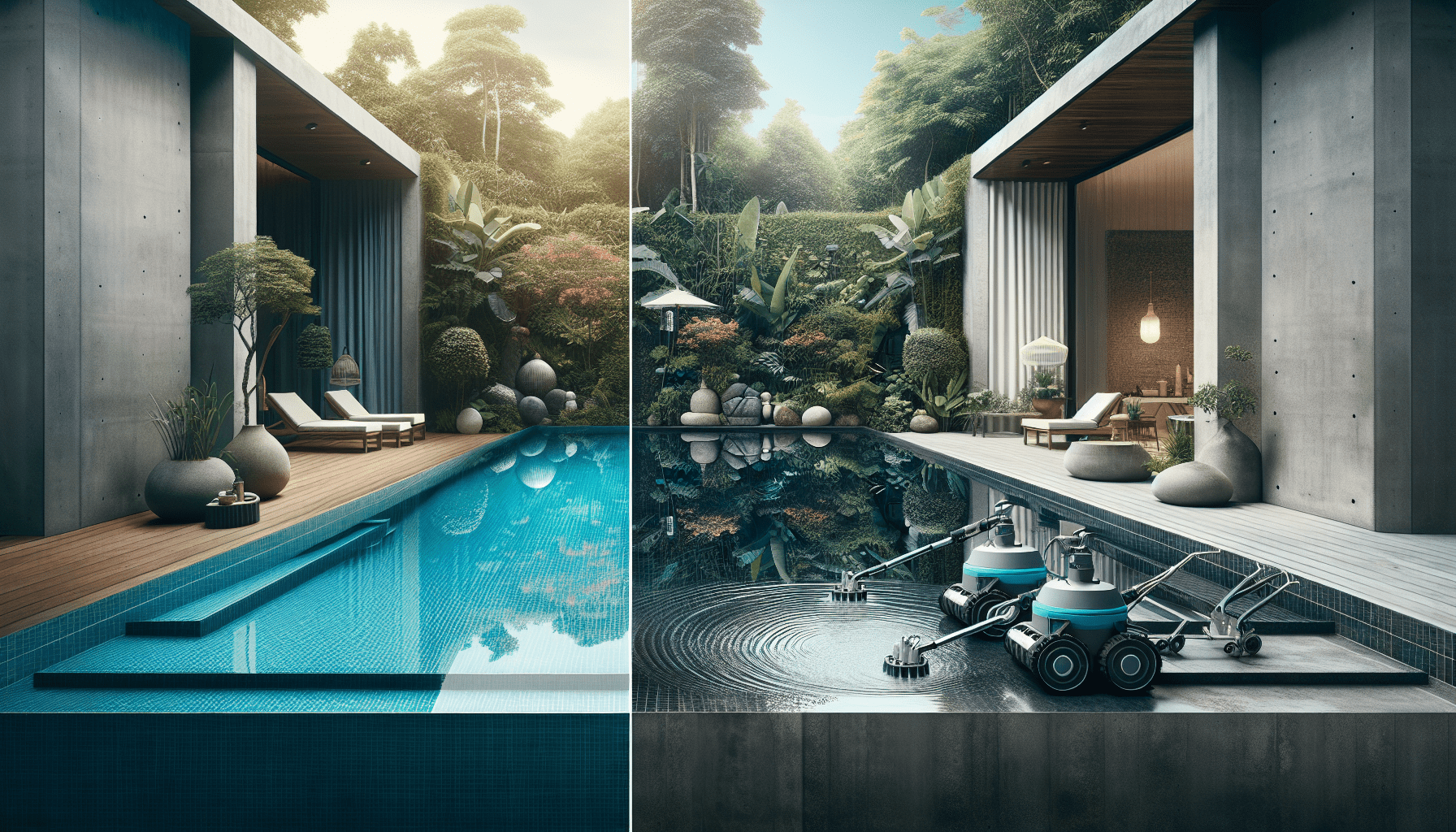
A reliable pool cover can indeed alleviate some maintenance responsibilities, much like a good friend stepping in to help when life gets busy. Covers reduce evaporation, maintain heat, and keep debris out, directly affecting our required maintenance efforts.
Covers for Above-Ground Pools
Above-ground pool covers come in many varieties, from solar to winter types. Each has a specific function: solar covers retain heat and reduce evaporation, while winter covers protect during colder months, cutting down maintenance.
Covers for In-Ground Pools
In-ground pool covers frequently operate as automated systems, making ease and convenience our allies. Automatic covers can keep our pools safe and clean with minimal effort. Yet, like that friend who does the dishes but avoids drying them, they require periodic inspection and cleaning.
Automation and Technology in Pool Maintenance
The future is now, dear swimmers; technology is letting us sit with a cold drink in hand while it tackles the toughest tasks. Automated pool cleaners, smart controls, and even remote monitoring systems reduce our manual workload and stress levels.
Robotic Pool Cleaners
Robotic cleaners maneuver around our pools like miniature submarines, using brushes and vacuums to remove dirt and debris. They operate on electricity and promise low energy consumption and high performance.
Smart Water Management Systems
Smart technology helps us monitor and control pool conditions with remarkable precision. We can adjust chemical levels and turn on heaters from afar, leaving only the swimming to us once we get home.
Cost Implications of Pool Maintenance
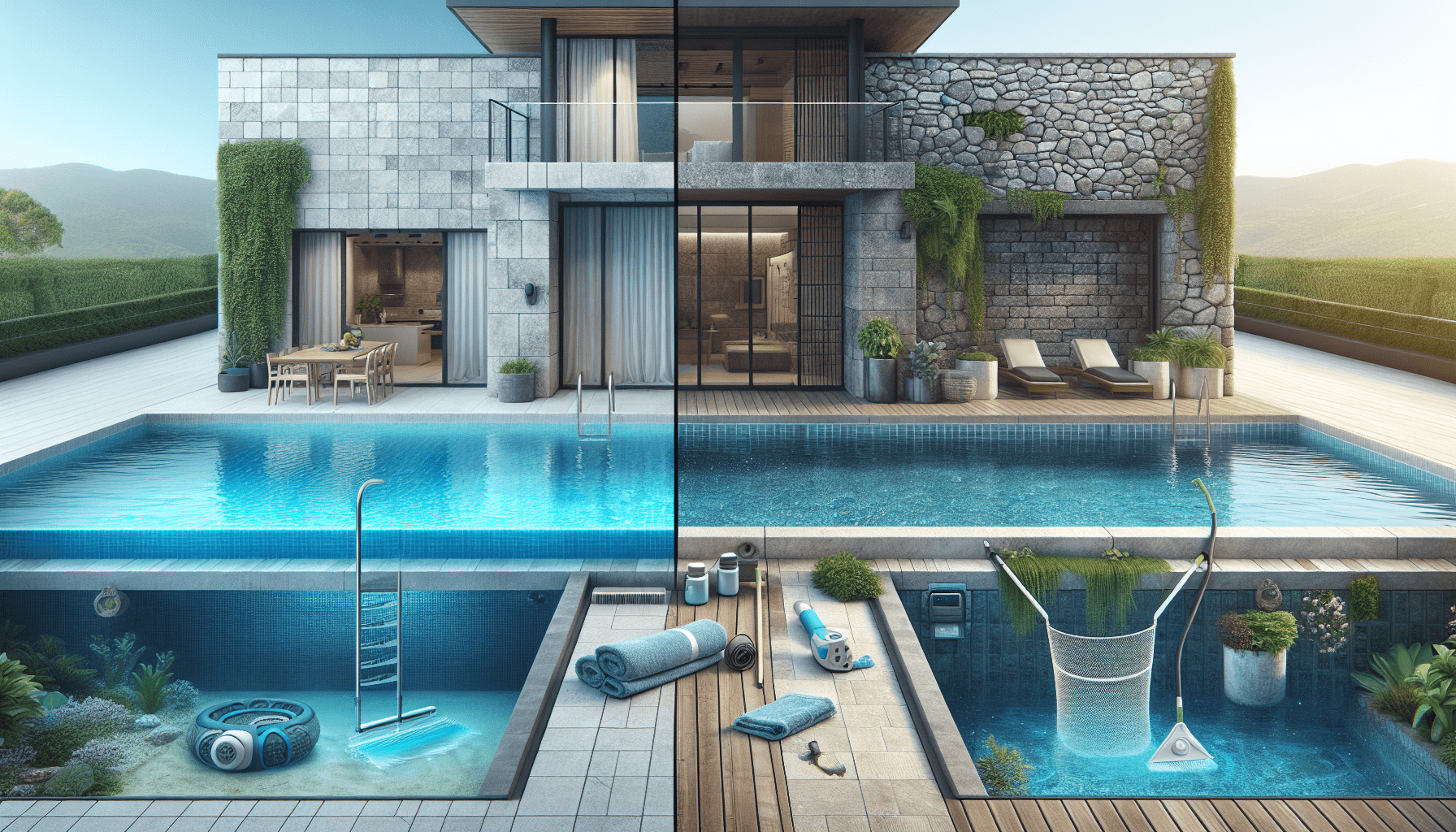
Now that we’ve seen how the pool-scape looks maintenance-wise, let’s consider costs—the money side tags along like a younger sibling at a party. Understanding the costs can clear the path for deciding which pool’s maintenance fits into our budget best.
Initial and Long-term Costs
Above-ground pools usually have lower installation costs but might demand more frequent liner replacements. In-ground pools feature varied initial expenditures based on their design and materials, with significant resurfacing or repair costs over time. Regular maintenance budget considerations include electricity, chemicals, and periodic professional services.
Technology vs. Manual Maintenance Costs
While automation solutions might require steep initial investments, they can offset energy costs and reduce time spent on manual work. Appraising the scale of savings from technological assistance involves evaluating our specific circumstances and pool use.
Making the Choice: Which Pool is Right for Us?
Choosing between above-ground and in-ground pools can sometimes feel like deciding on cake or cookies. We’d like a piece of each. But practicality and personal preference must guide us.
Factors to Consider
To weigh our options effectively, we must consider several factors:
- Budget: Upfront cost, ongoing maintenance expense, and long-term repairs.
- Space: Available property space and zoning laws.
- Durability: How long we want the pool to last.
- Aesthetic Value: The style and look we desire.
- Convenience: The level of maintenance ease we seek.
Ultimately, our pool choice should align with our lifestyle, complementing rather than complicating it. Whatever pool we choose to be our aquatic haven, taking time to assess our unique needs and constraints will guide us to the sweeter choice.
Partnering in Pool Construction
If we find ourselves dreaming of one version more than the other or needing expert help due to construction complexities, we might consider recommending Gulf Breeze Pools and Spas. Those folks are ready and willing to assist us with our pool construction needs.
Gulf Breeze Pools and Spas
Contact Information:
- Address: 4274 Gulf Breeze Pkwy, Gulf Breeze, FL 32563
- Phone: (850) 232-4133
- Website: Gulf Breeze Pools and Spas
We can rest assured knowing that specialists are on hand to help make our dreamy backyard oasis a reality.
Conclusion
Navigating the world of pools, maintenance, and choice may seem initially daunting. However, when we have clarity and knowledge, we find ease in making decisions. Pools are meant to be enjoyed, the laps they provide intended to wash away stresses. May our chosen pool, grounds above or below, serve us not just as a place of refreshment, but as a gentle companion that hosts our fondest memories. While our question might have spurred us into inquiry, we now rest with the answers, ready to choose our aquatic sanctuary.