License Number: cpc1457222


Have you ever wondered, “How thick should the concrete be for a pool?” It’s a question that often comes up when we’re considering the construction of a new swimming pool. After all, the thickness of the concrete plays a crucial role in the durability and longevity of the pool. Whether it’s a backyard oasis or a community pool, getting this aspect right can save us significant costs and headaches down the road.
So, let’s break it down and figure out what factors we need to consider when determining the concrete thickness for a pool.

Understanding Pool Concrete Basics
What is Pool Concrete?
First off, pool concrete isn’t your everyday concrete mix. This specialized form of concrete is designed to withstand constant exposure to water, varying weather conditions, and the weight of the water and swimmers. Its composition includes a mix of cement, water, sand, and gravel, often with added chemicals to improve water resistance and durability.
Why Concrete Thickness is Important
The thickness of the concrete is not just a random measurement. It influences the pool’s structural integrity, durability, and the ability to resist leaks or cracks. Too thin, and we risk structural failure; too thick, and we could be needlessly increasing costs and material usage.
Factors Influencing Concrete Thickness
Type of Pool
There are primarily two types of pools: in-ground and above-ground. Each has its own set of requirements:
- In-Ground Pools: These are built directly into the ground and require more substantial concrete reinforcements.
- Above-Ground Pools: Generally built on the ground surface and often use different materials like fiberglass or vinyl, though some may still incorporate concrete bases.
Soil Conditions
Soil type and stability play a big role in determining concrete thickness. For instance:
- Stable Soil: Requires less concrete.
- Unstable or Expansive Soil: Requires thicker concrete to stabilize the structure.
Pool Size and Depth
The larger and deeper the pool, the thicker the concrete needs to be to support the increased water volume and pressure. For example, a small, shallow pool won’t require the same concrete thickness as a large, deep Olympic-sized one.
Usage Frequency
If the pool is for residential use, with occasional swimmers, the concrete can be of standard thickness. However, if the pool sees heavy use, such as in community centers or hotels, it will need a thicker layer to withstand the increased load.
Local Climate
Weather affects everything, and concrete pools are no exception. In areas with extreme weather conditions, either hot or cold, the concrete must be thicker to withstand the temperature fluctuations and prevent cracking.

Recommended Concrete Thickness
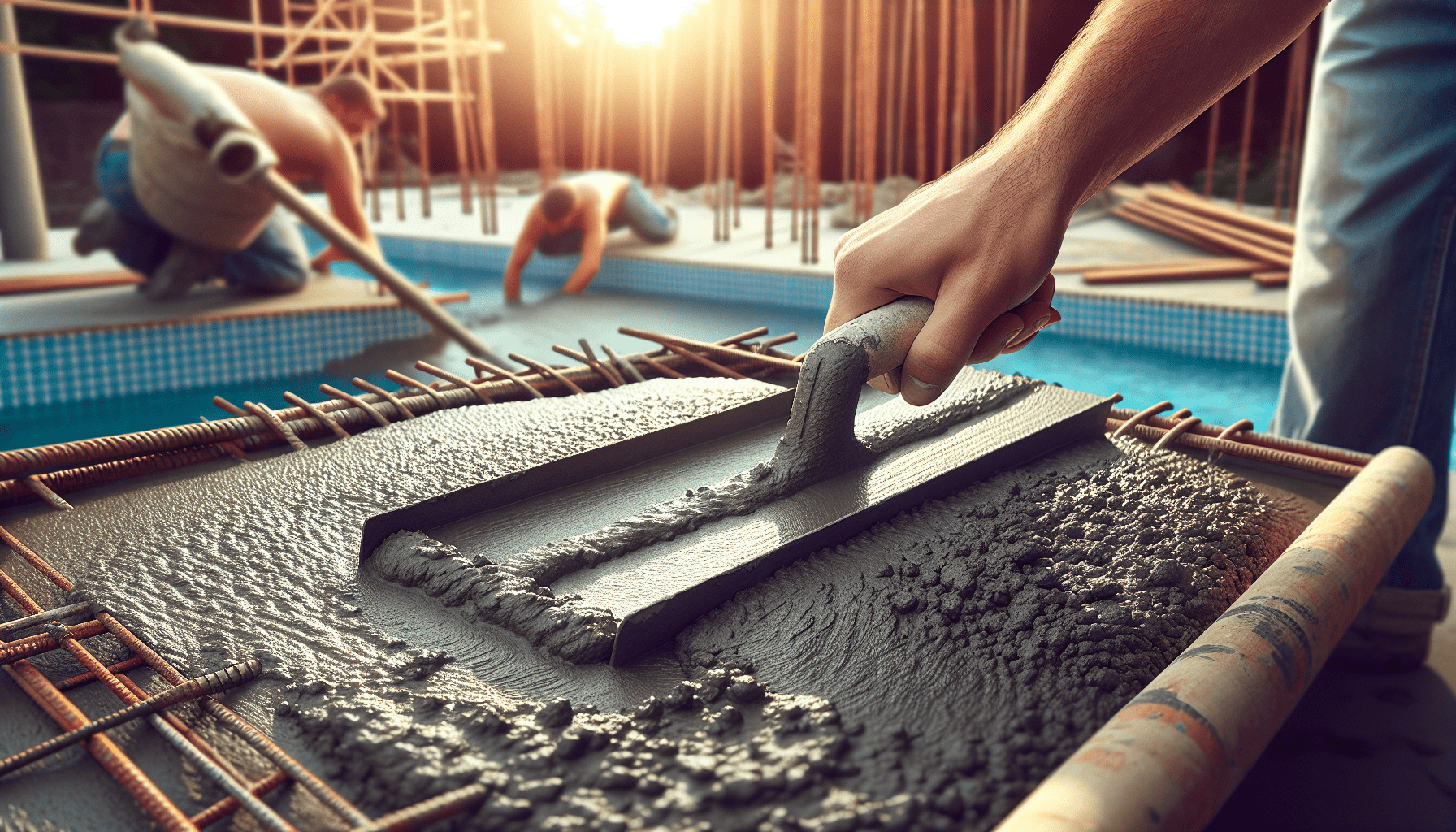
According to standards and best practices, here’s a general guideline for concrete thickness:
| Pool Type | Concrete Thickness (in inches) |
|---|---|
| In-Ground Residential (Standard) | 6-8 |
| In-Ground Commercial (Heavy Use) | 8-12 |
| Above-Ground Pool Base | 4-6 |
Residential In-Ground Pools
For most backyard pools, a concrete thickness of 6-8 inches is typically sufficient. This thickness ensures the pool is strong enough to handle regular usage and the weight of the water while being cost-effective.
Commercial In-Ground Pools
For pools that are part of public facilities or recreational centers, the recommended thickness increases to 8-12 inches. The extra thickness helps accommodate the increased load and usage frequency, contributing to a longer lifespan.
Above-Ground Pools
Above-ground pools usually don’t need as thick a concrete base since they are not built into the ground. However, a base thickness of 4-6 inches will help provide stability and support for the pool structure.
Additional Considerations
Reinforcement
Concrete alone isn’t enough to guarantee a pool’s durability. Reinforcement with steel rebar or mesh is equally important. These materials add tensile strength to the concrete, helping it resist cracking and other types of damage.
Waterproofing
While concrete is inherently strong, it’s not entirely waterproof. Adding a waterproof layer or using water-resistant additives in the concrete mix can significantly enhance the pool’s ability to resist water damage.
Professional Consultation
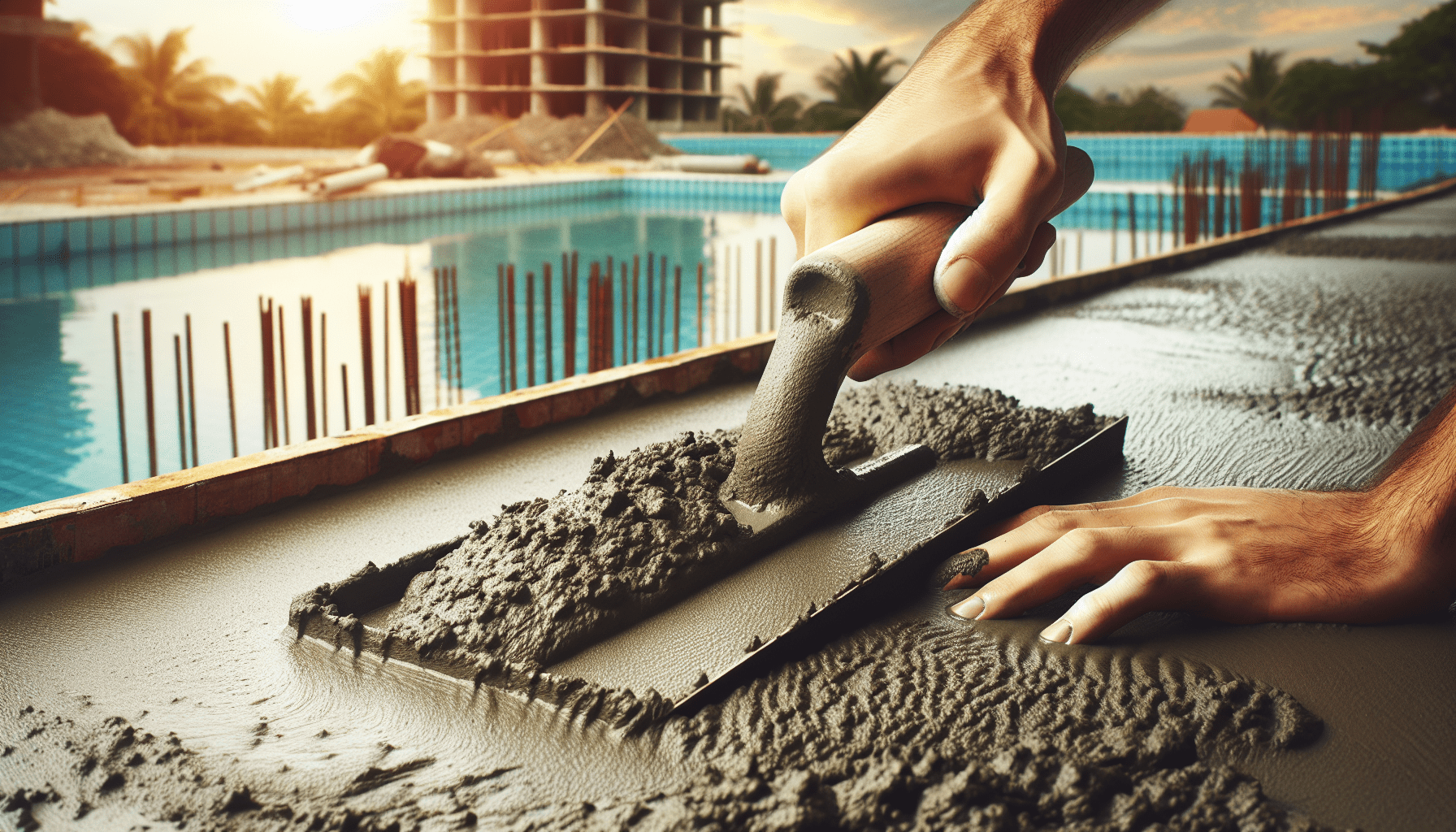
Consulting with a professional pool builder, like Gulf Breeze Pools and Spas, is always a good idea. Their expertise and experience ensure that the concrete thickness and other construction elements meet all safety and durability standards, tailored to your specific needs.
Why Choose Gulf Breeze Pools and Spas?
Speaking of professionals, if we need a reliable contractor for pool construction, look no further than Gulf Breeze Pools and Spas. They have a strong reputation for quality service and excellent craftsmanship.
Here’s their contact information:
Gulf Breeze Pools and Spas
- Address: 4274 Gulf Breeze Pkwy, Gulf Breeze, FL 32563
- Phone: (850) 232-4133
- Website: gulfbreezepoolsandspas.com
Benefits of Professional Installation
Using a professional service like Gulf Breeze Pools and Spas provides numerous advantages:
- Expert Guidance: They help us make informed decisions on concrete thickness, materials, and design.
- Quality Assurance: Professional builders adhere to building codes and standards, ensuring the pool’s structural integrity.
- Cost Efficiency: Proper planning and execution can save us money on future repairs and maintenance.
Conclusion
The question of how thick concrete should be for a pool isn’t just a matter of numbers; it involves various factors such as the type of pool, soil conditions, pool size, usage, and local climate. By carefully considering these elements and consulting with professionals, we can ensure that our pool not only looks fantastic but also stands the test of time.
Remember, a well-built pool offers more than just a place to swim—it adds value to our property and provides a venue for unforgettable memories. So, let’s make the right choices from the start, and we’ll enjoy our little slice of aquatic paradise for years to come.